Installing the App
What you need
- A Mac with macOS 15 Sequoia or later. Macs with Apple silicon and Macs with Intel processors both work.
- Touch ID is welcome but not needed. Where your Mac has no Touch ID, or it isn't set up, Private Passwords asks for your Mac's login password instead.
Installing
- Open the App Store on your Mac.
- Search for Private Passwords for Mac. That's its name in the App Store; on your Mac it's simply Private Passwords.
- Click Get, then Install, and confirm with Touch ID or your Apple Account password.
- When it has downloaded, click Open, or open Private Passwords from your Applications folder.
Where to find it
Private Passwords doesn't open a window and doesn't sit in the Dock. It lives as a key in your menu bar, at the top right of the screen.
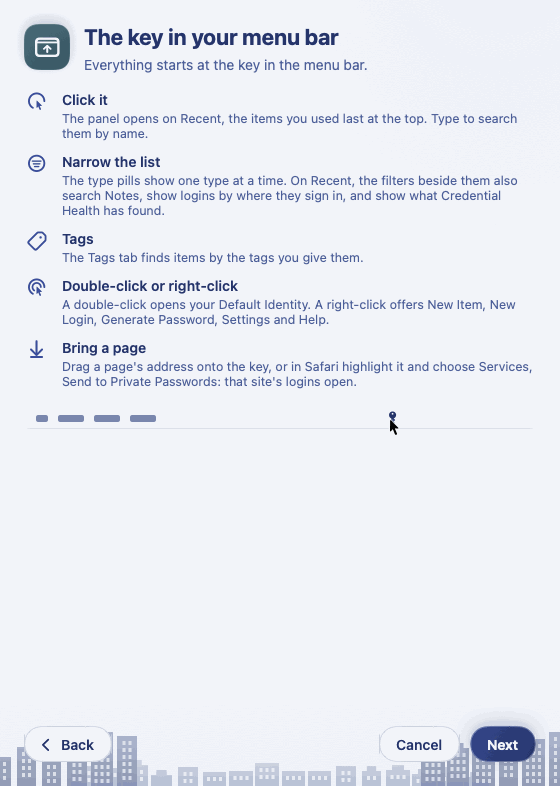
The first time it opens, the Welcome takes you through a few questions and a short tour. See Your First Launch.
Can't see the key?
On a MacBook with a camera notch, a full menu bar can hide icons behind the notch. Quit an app whose icon you don't need, or hold down ++command++ and drag other icons along the menu bar to make room.
Open it each time your Mac starts
In Private Passwords, open Info, then Settings…, and turn on Start on startup. The key is then in your menu bar every time you log in.
Before you start: iCloud Keychain
If you'd like your items to follow you to your iPhone, iPad and other Macs, check that iCloud Keychain is on before you open Private Passwords for the first time:
- Open System Settings and click your name at the top.
- Click iCloud, then Passwords.
- Make sure Sync this Mac is on.
You choose whether Private Passwords uses iCloud Keychain during the Welcome. You can't easily change your answer later, so it's worth deciding first.