Adding and Editing Items
Making something new
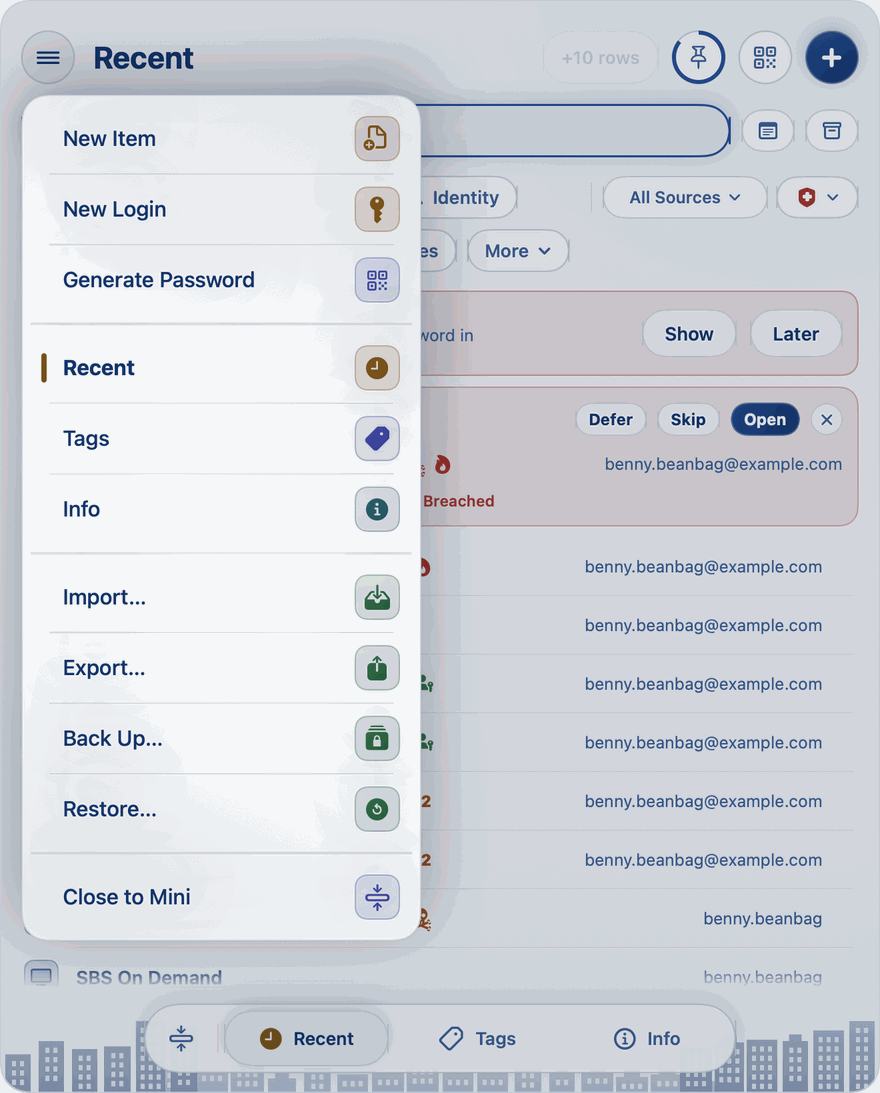
Right-click the key in the menu bar, or open the panel's Menu, and choose:
- New Login: a username and password for a website or app. See Adding Your First Login.
- New Item: anything else, from a template: a card, a note, a Wi-Fi network, a passport and so on. The + button at the top of the panel does the same.
Type and Template
Every item has a Type, such as Logins or Finance, which decides the pill it's listed under. It's made from a Template, which decides the boxes it has: a card has a number and an expiry date, a Wi-Fi network has a network name and a password.
When you make a new item, choose the template you need. New Login starts on your usual login template for you. See Types and the Default Type and Item Templates and Default Templates.
New Login and your identity
New Login opens beside your Default Identity's panel, so you can drag your details into a sign-up form while you make the login. At the top of New Login you can choose:
- its Type and Template;
- its Identity: choose another identity and its panel takes the place of the first, or choose None to work without one.
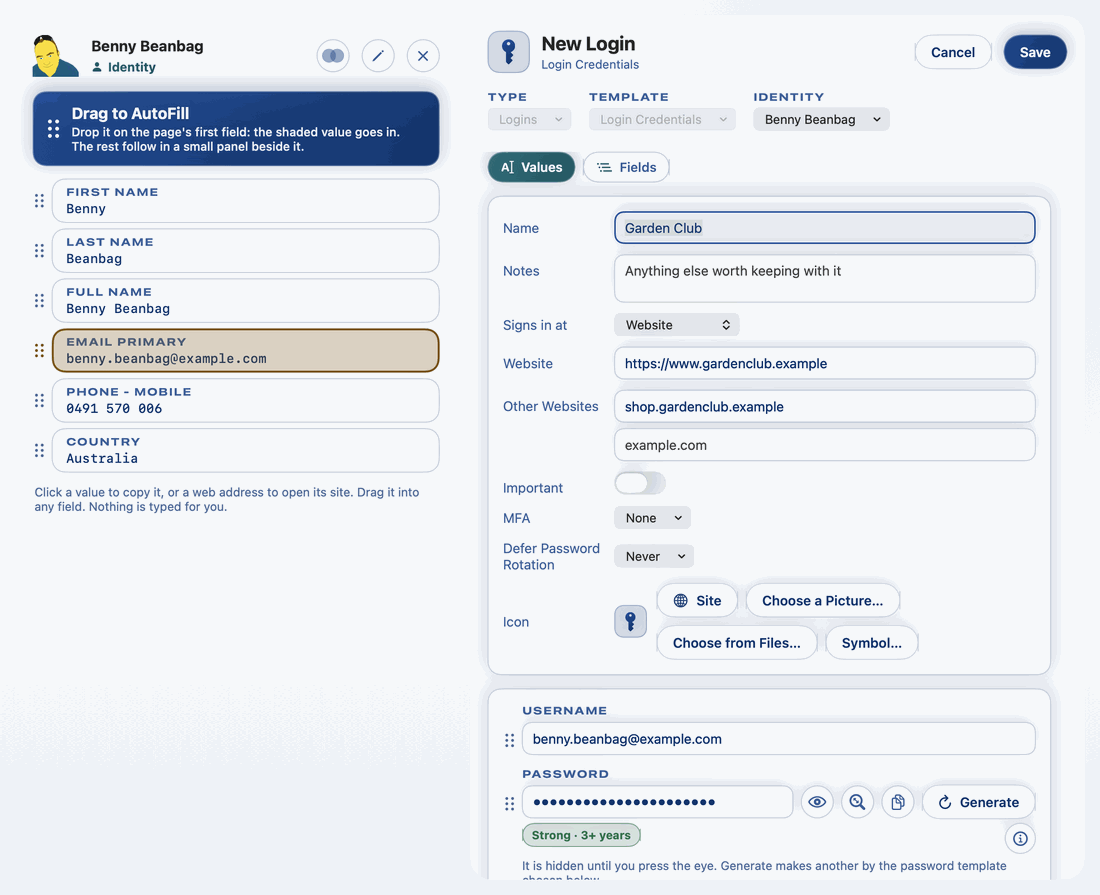
Each pane can be moved on its own. Save or Cancel closes both. Choosing New Login again while they're open brings them both to the front.
Filling in the boxes
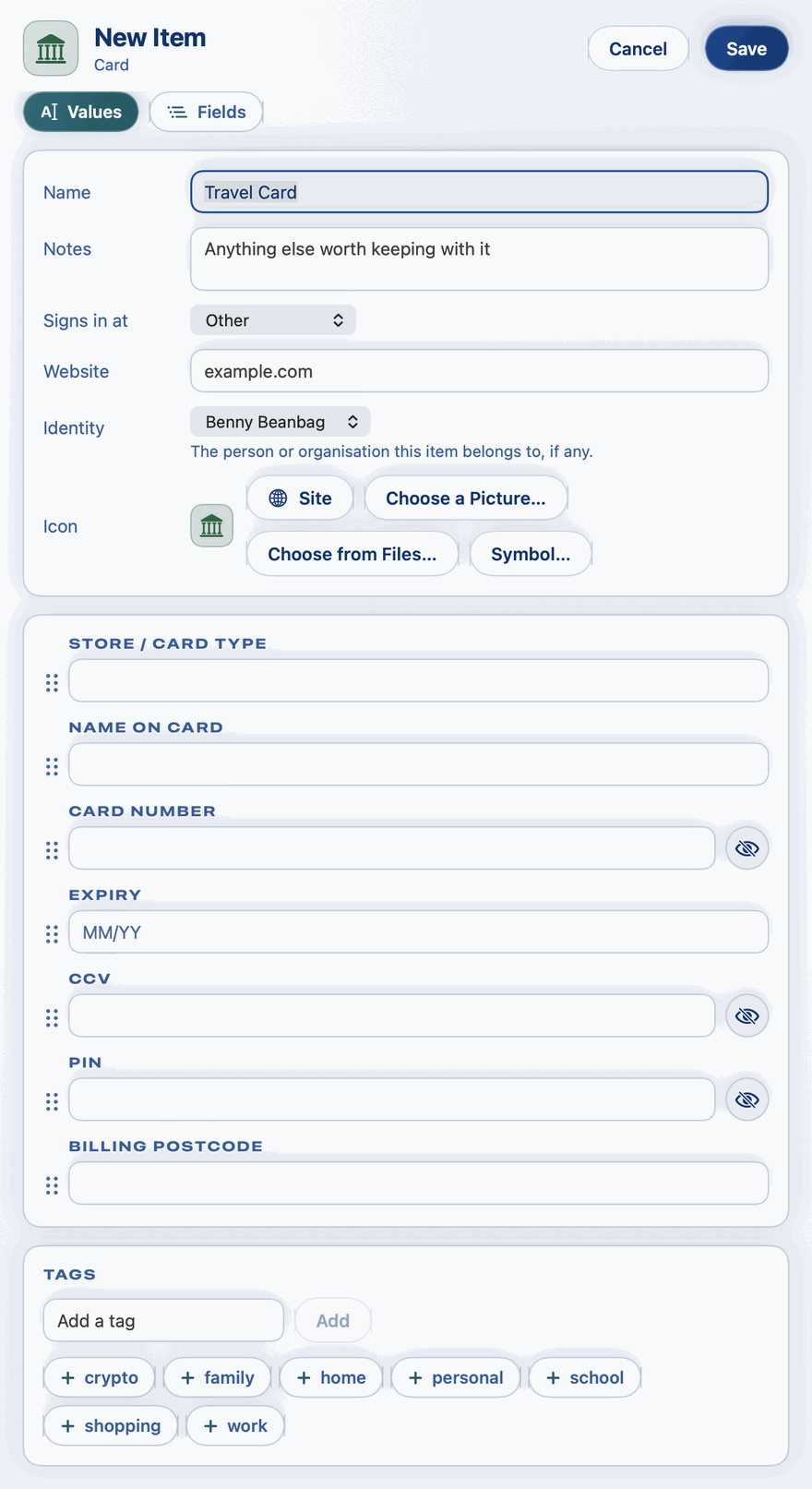
- Name is how the item appears in your lists. Every item needs one.
- Type into each box the template gives you. Boxes that hold secrets, such as passwords and card numbers, are hidden until you choose to show them.
- Notes is for anything else worth keeping.
- Signs in at says where an item is used. A login starts on Website and every other item on Other; change it
whenever you like:
- Website: type its address.
- Mac App: choose it from your Mac's apps, A to Z, or drop the app onto the list.
- iOS App, Android App or Windows App: type the app's name.
- Other: for things that belong to no website or app, such as a Wi-Fi network. A login set to Other keeps its Website.
- Other Websites lists any other addresses the same login works on. See Other Websites.
If you already have a login for the site you type, New Login names it under Website: "This site has a login already: …". You can still make another beside it.
Click Save when you're done, or Cancel to leave without saving. If you've changed something, Cancel asks Let your changes go?, with Discard and Keep Editing. Save can always be clicked: with nothing changed it just closes the item, and if something needs putting right, Private Passwords lists it and the item stays open. ⌘S saves too.
The icon
Click an item's icon to choose another:
- Site brings the website's own icon.
- Choose a Picture… picks one from Photos.
- Choose from Files… picks one from your files.
- Symbol… picks one of the app's symbols.
A new password is kept as soon as it leaves
When you make a new password and drag it into a page, or copy it, Private Passwords keeps the item straight away. A site never ends up with a password you don't have. The editor stays open, so you can carry on and click Save when you're done.
Editing an item
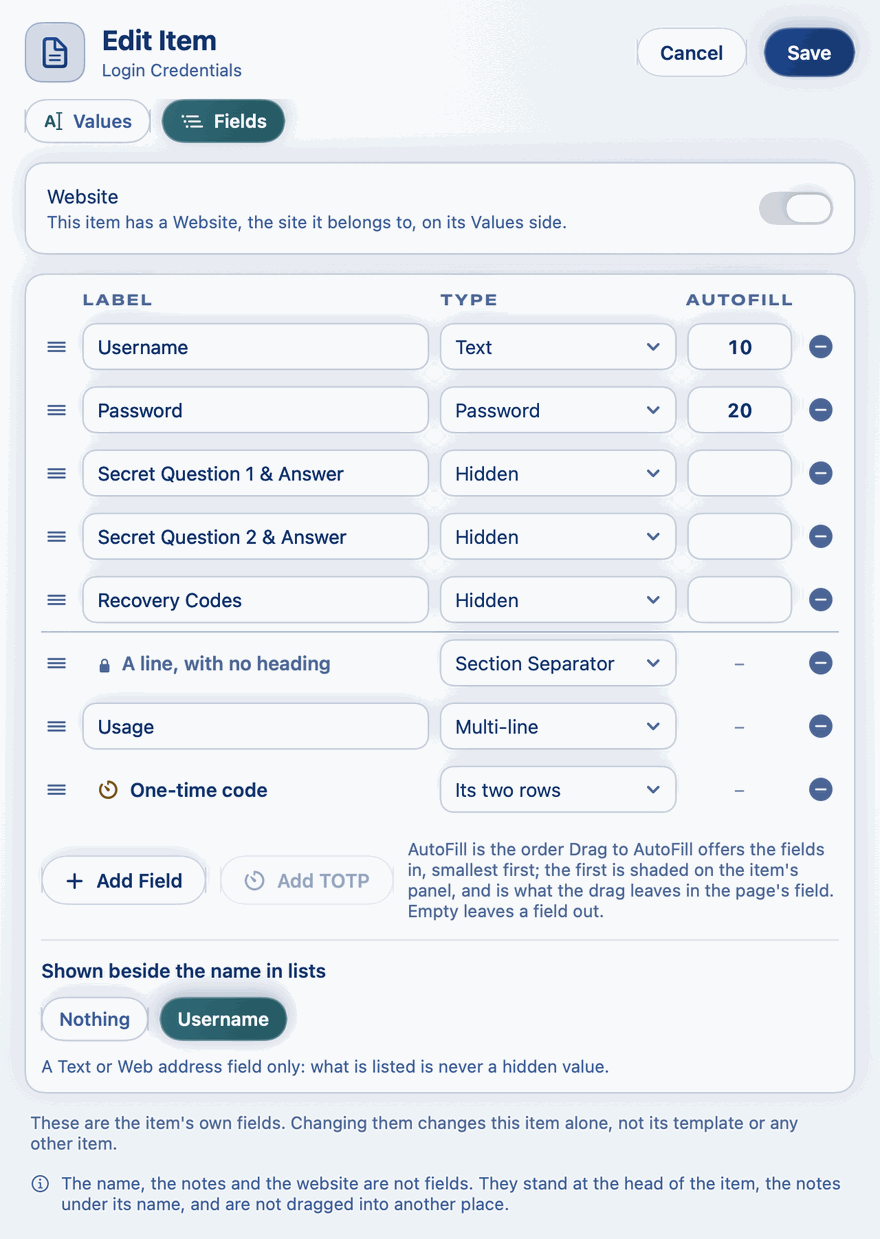
Open the item and click Edit. Change what you need, then click Save.
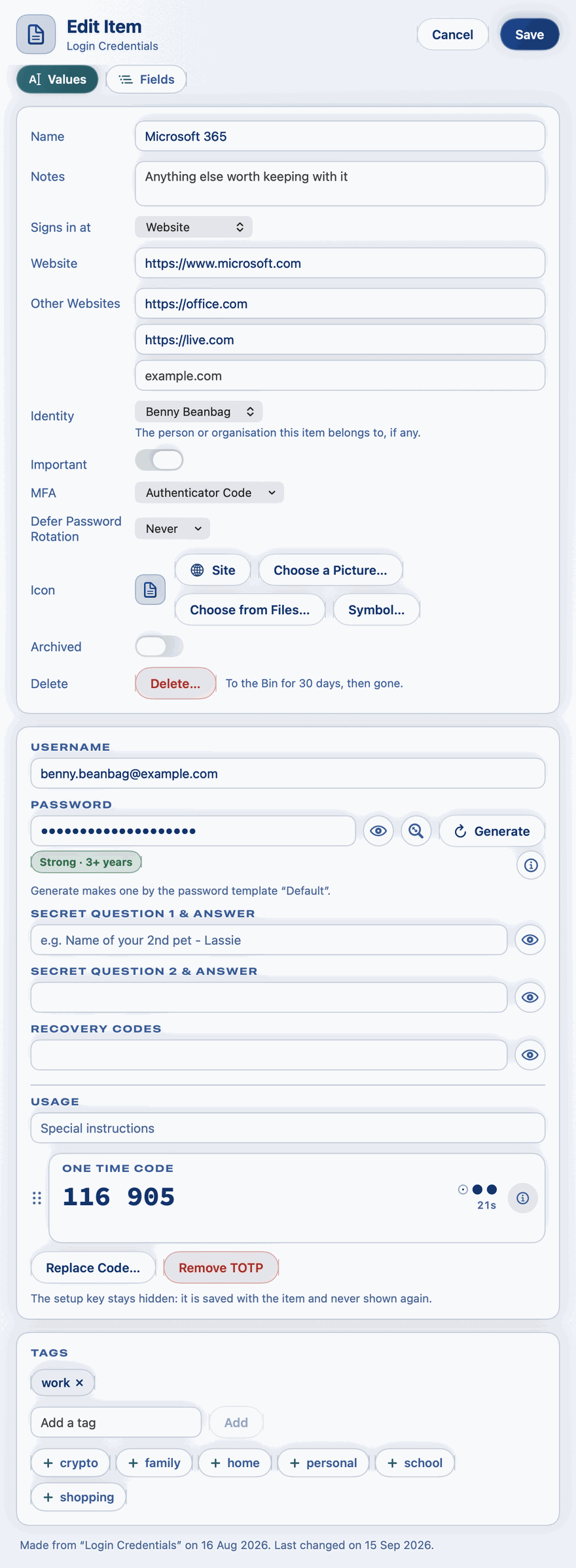
Changing a password
To change the password of a site you already use:
- Open the login and click the round arrow beside its password.
- Private Passwords makes a strong password under New Password, rated as the generator rates it. Click Regenerate for another, the eye to see it, or the magnifying glass to show it large. Choose a different password template, or set its length and characters, if the site needs something particular.
- On the site's change-password form, drag The password it has now into the "current password" box by its dots, and drag the New Password box into the "new password" boxes. Or click Copy and paste it.
- The moment the new password is dropped into the page, or copied, it's kept, and the old one is kept among the login's previous passwords.
- If the site turns the new password down, click Put Back Previous Password, and the login goes back to the password it had.